

Introduction
If you’ve been searching for a way to get stronger, move better, and feel healthier without spending endless hours at the gym, functional fitness might be your answer. In recent years, functional fitness UK trends have been on the rise, with gyms, group classes, and even at-home workout enthusiasts adopting it as part of their lifestyle.
But what exactly is functional fitness, why is it becoming so popular in the UK, and how can beginners start? This guide will cover everything—from functional fitness exercises to workout plans—so you can confidently begin your journey.
What Is Functional Fitness? (Explained for Beginners)
Functional fitness is a type of training that focuses on movements you use in daily life. Instead of just lifting heavy weights or running on a treadmill, functional exercises mimic real-life activities such as bending, pushing, pulling, squatting, or reaching.
Think of it this way:
-
Carrying your grocery bags
-
Lifting your child
-
Climbing stairs
-
Bending to pick something off the floor
These are all natural movements. Functional fitness ensures your body can perform them efficiently, safely, and without pain.
🔹 Key features of functional fitness training:
-
Uses multiple muscles at once (compound movements)
-
Improves balance, coordination, and flexibility
-
Focuses on strength, endurance, and mobility together
👉 For a more in-depth look at beginner-friendly fitness strategies, you can also check out Healthy-Yoda’s small habits for better health guide.
Top Benefits of Functional Fitness Training in the UK
Why is everyone suddenly talking about functional fitness in the UK? It’s simple: the benefits go beyond the gym.
1. Improves Everyday Strength
Unlike isolated gym workouts, functional training builds practical strength you’ll use daily.
2. Reduces Risk of Injury
By strengthening stabilizer muscles and improving mobility, it lowers the chance of injuries at work, home, or while playing sports.
3. Enhances Mobility & Flexibility
Movements such as lunges, squats, and rotational exercises help you stay mobile and flexible, especially important as we age.
4. Boosts Heart & Overall Health
Many functional fitness exercises UK include cardiovascular activity, improving heart health and energy levels.
5. Adaptable for All Levels
Whether you’re a beginner, a senior, or an athlete, functional fitness can be tailored to your fitness level.
Suggestion: Cite NHS UK page on benefits of physical activity
Best Functional Fitness Exercises for Everyday Strength
If you’re new to this style of training, start with simple exercises that combine strength, balance, and flexibility.
Here are some functional fitness exercises to try:
-
Squats – builds leg and core strength (think standing up from a chair).
-
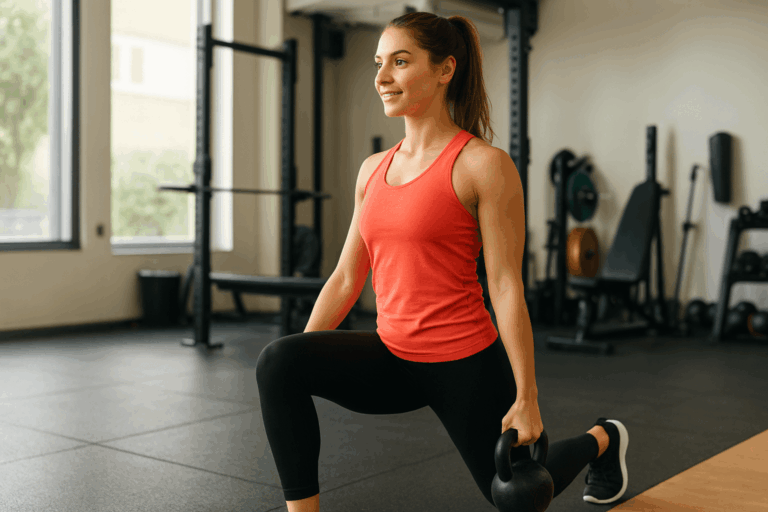
Lunges – improves balance and strengthens legs.
-
Push-ups – builds chest, shoulders, and core.
-
Planks – develops core stability and posture.
-
Farmer’s Carry – mimics carrying shopping bags, strengthens grip and core.
-
Step-ups – improves lower body strength and mimics climbing stairs.
💡 Pro tip: Combine 4–5 of these exercises into a circuit and repeat 3 times for a quick 20-minute workout.
How to Create a Functional Fitness Workout Plan
Starting with a functional fitness workout plan is easier than you think.
Step 1: Warm Up
-
5 minutes of light jogging or skipping rope
-
Dynamic stretches (arm circles, leg swings)
Step 2: Core Workout
-
Squats – 3 sets of 12 reps
-
Push-ups – 3 sets of 10 reps
-
Lunges – 3 sets of 12 reps each leg
-
Plank – hold for 30–60 seconds
-
Farmer’s Carry – 2 rounds of 30 steps
Step 3: Cool Down
-
Stretch hamstrings, quads, shoulders
-
Deep breathing for relaxation
👉 Once you progress, you can add weights, resistance bands, or kettlebells.
For long-term success, try building a weekly routine:
-
3 functional fitness sessions
-
2 cardio sessions (running, cycling, swimming)
-
1 active recovery day (yoga, walking)
Functional Fitness for Beginners: Tips to Get Started
If you’re just starting out, keep these in mind:
-
Start slow: Focus on form before adding weights.
-
Stay consistent: 2–3 sessions a week is enough for visible results.
-
Listen to your body: If something hurts, modify the exercise.
-
Mix it up: Combine strength, cardio, and mobility for balance.
-
Track progress: Note reps, sets, and improvements weekly.
Remember, functional fitness is about making everyday life easier, not just about how much you can lift.
Conclusion
Functional fitness is more than a trend—it’s a sustainable way to stay strong, healthy, and mobile for life. Whether you’re a complete beginner or looking to upgrade your workouts, incorporating functional movements can transform your fitness journey.
So why wait? Try a functional fitness workout plan this week and experience the benefits yourself.
👉 Want more health and fitness insights? Explore our latest articles on Healthy-Yoda and join our community for tips on nutrition, mental health, and lifestyle wellness.
Be the first to comment