

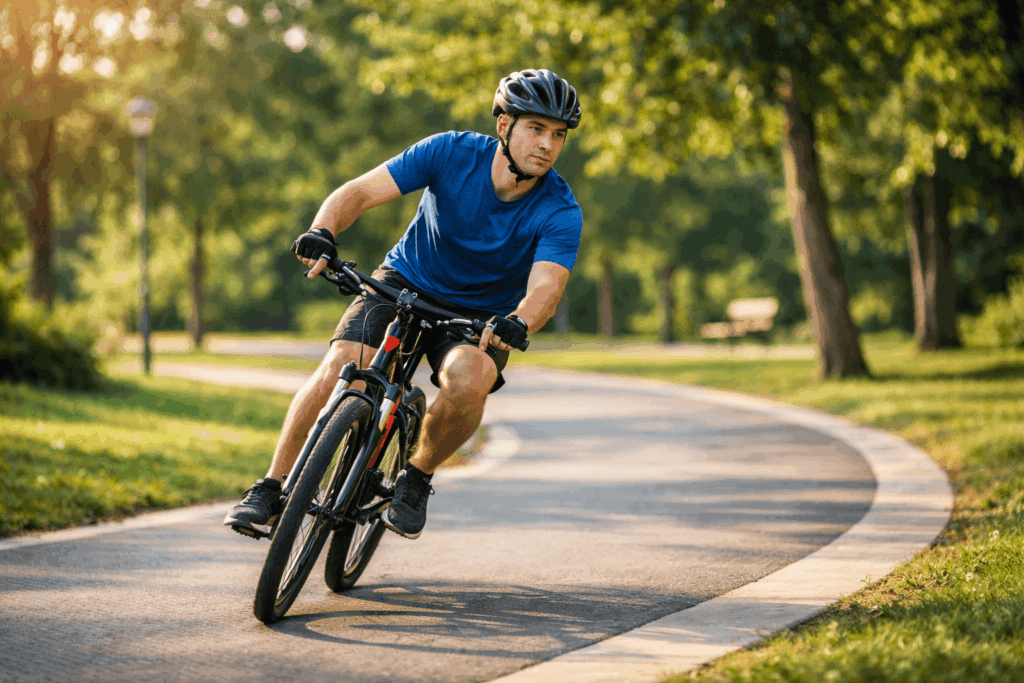
Cycling is often seen as a simple way to stay fit. But beyond cardio and leg strength, it offers something just as valuable: better balance and coordination.
Whether you ride to work, train on weekends, or just enjoy casual spins, cycling challenges your body in ways that improve control, stability, and movement efficiency. Over time, these benefits carry into daily life—helping you move with more confidence and react faster in real-world situations.
In this guide, we’ll explain how cycling improves balance and coordination, why it works, and how you can get the most out of every ride.
Why Balance and Coordination Matter
Balance and coordination are essential for almost everything you do:
- Walking on uneven ground
- Climbing stairs
- Avoiding obstacles
- Reacting quickly to sudden movements
As people age, these abilities tend to decline. That’s one reason falls become more common. The good news is that regular movement training can improve both skills.
Cycling stands out because it combines rhythm, control, and continuous adjustment—all in one activity.
How Cycling Trains Your Balance
At first glance, riding a bike may seem easy. But staying upright on two wheels requires constant input from your body.
1. Continuous Micro-Adjustments
When you ride, your body makes small corrections every second:
- Shifting weight
- Adjusting steering
- Responding to terrain
These tiny movements train your balance system without you even noticing.
In fact, research shows that cycling helps improve balance and reaction time, especially in older adults who ride regularly.
2. Core Engagement
Your core muscles play a key role in keeping you stable on the bike.
- Your abs and lower back stabilize your torso
- Your hips control side-to-side movement
- Your shoulders help guide direction
Unlike sitting in a chair, cycling activates these muscles continuously. This leads to stronger, more responsive balance over time.
3. Dynamic Stability
Cycling is not static. You’re always moving forward, which forces your body to adapt in real time.
This is called dynamic balance—the ability to stay stable while in motion.
The more you ride, the better your body becomes at:
- Maintaining control at different speeds
- Handling turns and curves
- Staying steady on uneven surfaces
How Cycling Improves Coordination
Coordination is about how well your body parts work together. Cycling is one of the best activities for building this skill.
1. Lower Body Coordination
Pedaling may look simple, but it involves precise timing between muscles.
Studies show that cycling improves smoothness, accuracy, and coordination in lower limb movement.
Each pedal stroke trains your brain and muscles to work in sync:
- One leg pushes down
- The other lifts and resets
- Your cadence stays consistent
Over time, this creates more efficient and controlled movement patterns.
2. Hand-Eye Coordination
When riding outdoors, you constantly process visual information:
- Watching traffic
- Avoiding obstacles
- Reading the road ahead
Your brain quickly translates what you see into action:
- Steering adjustments
- Speed changes
- Braking decisions
This improves reaction speed and coordination between your eyes and hands.
3. Whole-Body Integration
Cycling connects your entire body:
- Legs generate power
- Core stabilizes
- Arms guide direction
Everything must work together smoothly. This full-body coordination is why cycling feels natural after practice—and why it improves movement skills beyond the bike.
The Brain-Body Connection
Cycling doesn’t just train your muscles—it also trains your brain.
Regular cycling has been linked to improved cognitive function and better neural coordination.
Here’s what happens:
- Your brain strengthens communication with muscles
- Movement patterns become more efficient
- Reaction times improve
This process is known as neuromuscular adaptation, and it plays a key role in both balance and coordination.
Real-Life Benefits of Better Balance and Coordination
The improvements you gain from cycling don’t stay on the bike. They show up in everyday life.
Reduced Risk of Falls
Better balance helps you stay stable in unexpected situations.
Faster Reactions
Improved coordination allows you to respond quickly to changes.
Smoother Movement
Daily activities feel easier and more controlled.
Greater Confidence
You move with more awareness and less hesitation.
Cycling is especially helpful for older adults, as it supports independence and mobility over time.
How to Maximize These Benefits
If you want to improve balance and coordination through cycling, how you ride matters.
1. Ride Regularly
Consistency is key. Even short rides a few times a week can make a difference.
2. Vary Your Terrain
- Smooth roads build rhythm
- Rough surfaces challenge balance
Mixing both helps your body adapt.
3. Practice Slow Riding
Riding slowly is harder than riding fast. It forces you to:
- Control your balance precisely
- Make constant adjustments
Try riding in a straight line at low speed—it’s a great training tool.
4. Use Proper Setup
A stable riding position helps you focus on control:
- Adjust saddle height
- Keep handlebars comfortable
- Maintain a relaxed posture
And for safety—especially when practicing in low light—use a reliable bike light so you can stay visible and focused on your movement.
5. Stay Aware of Your Surroundings
When riding outdoors, always stay alert. A good front light for cycle use improves visibility and gives you more time to react, which supports both coordination and safety.
Cycling vs Other Activities
Many exercises improve fitness, but cycling has a unique advantage:
- It is low-impact (easy on joints)
- It trains rhythm and timing
- It combines balance with forward motion
Unlike static exercises, cycling teaches your body to stay stable while moving—just like real life.
Who Can Benefit Most?
The short answer: almost everyone.
Cycling is especially helpful for:
- Beginners building basic coordination
- Adults improving fitness and mobility
- Older riders maintaining balance and independence
It’s also a great cross-training tool for athletes in sports that require agility and control.
Final Thoughts
Cycling is more than just a way to get from point A to point B. It’s a powerful tool for improving how your body moves.
By riding regularly, you train your balance, sharpen your coordination, and strengthen the connection between your brain and muscles.
The result?
You move better, react faster, and feel more in control—both on and off the bike.
So next time you ride, remember: every pedal stroke is helping you build a stronger, more stable body.
Be the first to comment