

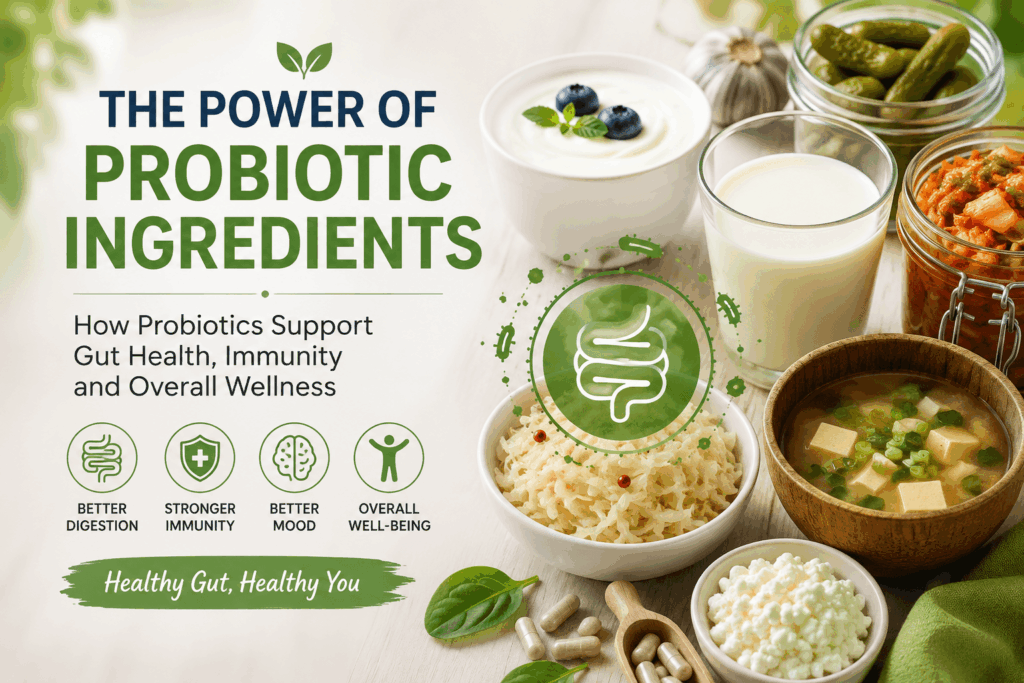
A decade of innovation the last 10 years has caused quite a debate around everything to do with our health. What started with thinking about calories, vitamins, and exercise, the research has moved to consider our digestive health, which scientists now agree plays a significant role in our overall well-being. Billions of microscopic organisms call our gut home, and the impact that these small guests have is now believed to affect not just digestion, but our immunity, metabolism, and even our mental state.
And with that, probiotic ingredient expansion Beyond just supplements shelves Probiotics are no longer confined to supplements; instead, we are seeing them become an addition to everyday foods and beverages. Many producers of yogurt and kefir have infused them into their products, along with fortified beverages and nutritional food products. Health benefits make probiotic ingredients choice for consumers in food and beverage Products fortified with the “good” bacteria for a happy gut are becoming more and more popular amongst consumers. As per DataIntelo’s analysis, the global probiotic ingredient market, which stood at USD 6.62 million in 2025, will be worth USD 13.04 billion in 2034, at a CAGR of 7.8 percent. The increase in awareness about the importance of the digestive health, preventative measures and healthy eating with functional foods are driving the growth in the sector.
Understanding Probiotic Ingredients
Probiotic ingredients are a type of microorganism that when ingested at the proper amounts offer a positive impact to the human body. They’re different from ‘regular’ bacteria because they’re the only types that can reach the intestinal tract where they influence the intestinal flora.
Here’s the most well-known probiotic ingredients:
- Lactobacillus species
- Bifidobacterium species
- Saccharomyces boulardii (beneficial yeast)
different strains have their own particular jobs, from immune support to absorption and maintaining digestive equilibrium. Rather than providing an on-off digestive “fix”, they work to promote diverse communities of microbes, an indication of digestive health over the long term.
Why Gut Health Matters More Than Ever
The gut microbiome is comprised of almost 100 trillion bacteria living inside the human digestive tract that help humans to:
- Digesting dietary fiber
- Producing certain vitamins
- Supporting immune function
- Protecting against harmful bacteria
- Maintaining intestinal barrier integrity
About 70 percent of the body’s immune cells-which work together to identify and destroy invaders-are in fact located in immune tissues within the gastrointestinal tract known as gut-associated lymphoid tissue.
Modern lifestyles, however, can disrupt this delicate ecosystem. Common contributors include:
- Highly processed foods
- Frequent antibiotic use
- Chronic stress
- Poor sleep quality
- Low dietary fiber intake
When microbial balance is disturbed, digestive discomfort, reduced nutrient absorption, and weakened immune responses may follow.
The Science Behind Everyday Probiotic Consumption
Scientific evidence continues to grow regarding the benefits of probiotic ingredients.
Clinical studies have shown that certain probiotic strains may help:
- Improve digestive regularity
- Reduce occasional bloating
- Restore gut bacteria following antibiotic therapy
- Support immune function
- Improve lactose digestion
- Strengthen intestinal barrier health
And keep in mind that different probiotic strains do different things: what benefits they offer is specific to the microorganism, the dosage, how it’s stored and even your health status. A team of researchers says it’s important to choose probiotics with documented research rather than assume all probiotic supplements will help in the same way.
Functional Foods Are Leading the Wellness Movement
Consumers increasingly prefer obtaining nutrients from everyday foods instead of relying solely on dietary supplements.
Food manufacturers have responded by incorporating probiotic ingredients into products such as:
- Yogurt
- Kefir
- Fermented milk drinks
- Kombucha
- Functional beverages
- Nutrition bars
- Breakfast cereals
- Cheese
- Frozen desserts
This trend is part of a move toward “food as medicine,” in which healthy food can prevent or treat health conditions, instead of just sating an appetite. Technology is making it possible to enhance probiotic product stability with encapsulation methods designed to preserve helpful microbes throughout the manufacturing, storage, and digestive processes.
Market Growth Reflects Changing Consumer Priorities
The rapid expansion of the probiotic ingredients industry illustrates broader changes in consumer behavior.
| Market Indicator | Data |
| Global Market Size (2025) | USD 6.62 Billion |
| Projected Market Size (2034) | USD 13.04 Billion |
| Forecast CAGR | 7.8% |
| Key Growth Drivers | Functional foods, digestive health awareness, preventive nutrition, microbiome research |
Several factors continue driving market expansion:
- Greater awareness of digestive health
- Rising demand for preventive healthcare
- Increased consumption of functional foods
- Scientific advances in microbiome research
- Growing aging population
- Higher interest in personalized nutrition
Healthcare professionals are also placing greater emphasis on nutrition-based interventions alongside traditional treatment approaches.
Beyond Digestion: Emerging Health Benefits
Our understanding of gut health is not restricted to ease of digestion and the impact of food going in versus coming out. We are continuing to discover new information, and science continues to look into the links between your gut microbiome and other areas of health such as: Your immune function: Bacteria assist in helping to develop the body’s defence against infection while also curbing overactive inflammation. Your mental wellbeing: This topic, often referred to as the “gut-brain axis”, continues to be a popular area of study for researchers.
Your gut microbes may have the ability to influence both mood and overall brain health. Your metabolic health: There is evidence to show that, due to interaction with certain nutrients in your food, your gut bacteria can modify blood sugar, control hunger levels and regulate energy usage. Healthy ageing: As bacterial numbers tend to decrease naturally over time, there may be an advantage in trying to maintain diversity within your gut, especially as you get older.
There is more and more evidence building, but at this point, this is just further proof that it’s important to keep your gut health at its optimum all your life.
Choosing Probiotic Foods Wisely
Not every product labeled “contains probiotics” delivers meaningful benefits.
Consumers should consider several factors:
- Products containing identified probiotic strains
- Clearly stated colony-forming units (CFUs)
- Proper storage recommendations
- Evidence-supported formulations
- Balanced diets rich in dietary fiber
Add more fiber Foods that are rich in fiber-fruits, vegetables, beans, whole grains and oats-are prebiotic food and helps to feeding friendly bacteria in gut along with taking probiotic. Consistent consumption Regular consumption of probiotic-rich foods generally offers more health benefits compared to eating it sporadically.
The Future of Everyday Wellness Starts in the Gut
Gut health is fast-emerging as a significant building block in preventive wellness. The research around our microbiomes continues to transform nutrition and guide us beyond simple vitamins and toward a healthy inner garden. Probiotic ingredients are a symptom of this movement towards science-backed nutrition and functional foods aimed at optimizing our well-being over the long haul.
With the continuing evolution of scientific insight and culinary ingenuity, it’s very likely that probiotic ingredients will transition into an integral part of everyone’s diets for years to come. Supported by a balanced diet, routine exercise, ample sleep and reduced stress, probiotic ingredients can help enhance our bodies’ ability to support digestion and overall well-being, without replacing the advice and treatments from your doctor or healthy habits.
Reference: https://dataintelo.com/report/global-probiotic-ingredients-market
Be the first to comment