

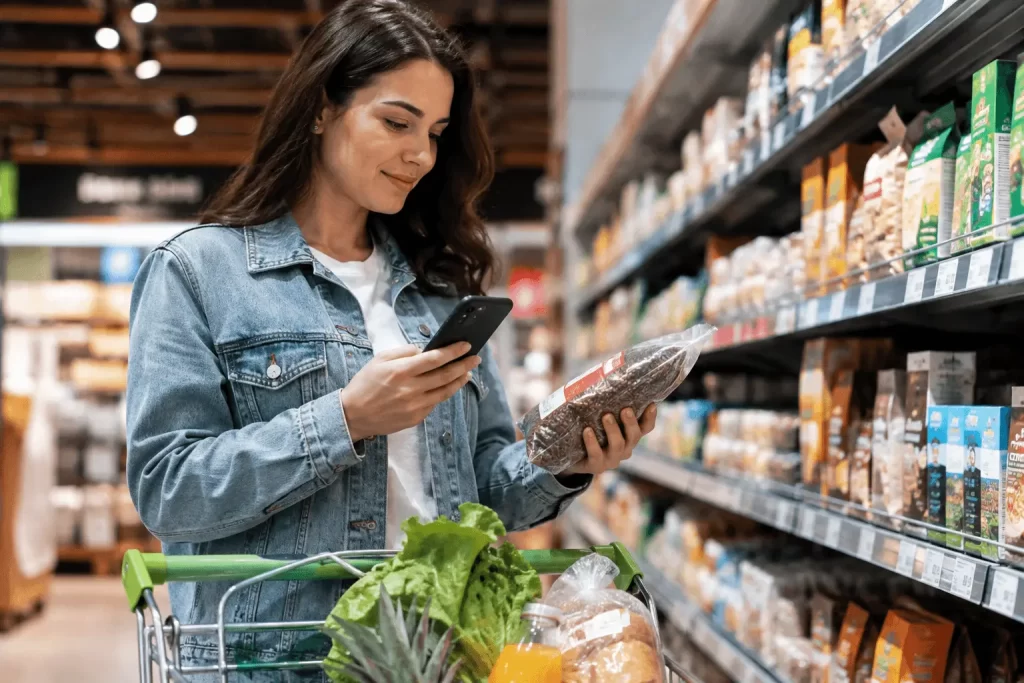
Nutrition is becoming increasingly personalized. Instead of asking whether food is simply “healthy” or “unhealthy,” consumers want to know how much fiber, protein, sugar, sodium, and carbohydrate it contains. A Nutritional Scanner can translate complex food information into practical comparisons. For gut-conscious consumers, this technology connects nutrition science with everyday shopping and informed dietary choices.
As per DataIntelo’s analysis, the global nutritional scanner market was valued at $2.4 billion in 2025 and is projected to reach $6.8 billion by 2034, expanding at a 12.3% compound annual growth rate (CAGR) from 2026 to 2034. This expansion reflects increasing interest in digital tools that make nutritional information easier to access, compare, and understand.
What Is a Nutritional Scanner?
A Nutritional Scanner is a digital tool that interprets food information through barcodes, labels, photographs, or ingredient databases. Depending on the system, it may use optical character recognition, computer vision, artificial intelligence, or nutrition databases to identify calories, macronutrients, fiber, sugars, sodium, saturated fat, and ingredients.
Its primary advantage is speed. A scanner can organize multiple nutritional details within seconds, allowing consumers to compare products without manually calculating every value. However, it should be considered an educational tool rather than a diagnostic device or replacement for professional nutritional advice.
Why Fiber Matters for Gut Health
Fiber is central to gut-friendly nutrition because certain fibber’s escape digestion in the small intestine and become available to microorganisms in the colon. Different fiber’s behave differently, meaning the number printed beside “fiber” does not tell the entire biological story.
Adults should aim for at least 25 grams of naturally occurring dietary fiber daily. A useful dietary benchmark is approximately 400 grams of fruits and vegetables each day. Carbohydrates should primarily come from whole grains, vegetables, fruits, and pulses.
These numerical benchmarks give a Nutritional Scanner useful context. Instead of simply labelling a food “high fiber,” a technology platform could show how its fiber contribution fits into a person’s daily dietary pattern.
Resistant Starch: A Different Kind of Carbohydrate
Resistant starch deserves particular attention because it is not completely digested in the small intestine. Some resistant starch reaches the colon, where microorganisms can ferment it and produce short-chain fatty acids.
A peer-reviewed crossover study enrolled 76 healthy adults and lasted 7 weeks. Participants consumed 3 starch conditions: resistant starch type 2, resistant starch type 4, and digestible starch. Each treatment lasted 10 days, followed by 5-day washout periods.
Researchers examined gut microbiome characteristics and short-chain fatty acids. The findings indicated that baseline dietary fiber intake and existing microbiome characteristics could help explain differences in responses to resistant starch.
This matters for personalized nutrition. Two people can consume the same resistant-starch food yet experience different biological responses. Consequently, a scanner should avoid simplistic statements such as “this food will improve your gut.” Providing transparent nutritional information is a more responsible approach.
New Evidence From 2026 Research
Research published in 2026 provides another useful numerical example. A randomized, double-blind, parallel-group trial involved 76 healthy adults consuming food containing high-amylose wheat for 2 weeks.
The intervention provided approximately 5.5 grams of dietary fiber per day, including 2.9 grams of resistant starch. The control food provided approximately 0.7 grams of dietary fiber per day.
Researchers examined fermentation-related outcomes and short-chain fatty acids. Such research demonstrates why fiber quantity, fiber type, food structure, and individual biology all matter.
A Nutritional Scanner that reports only “high fiber” cannot capture every physiological variable. Nevertheless, it can help consumers identify products and ingredients that deserve closer nutritional consideration.
What Should a Nutritional Scanner Measure?
A useful system should prioritize measurable information rather than relying entirely on a single health score. Important fields include serving size, calories, protein, carbohydrate, dietary fiber, sugars, sodium, saturated fat, and ingredient composition.
When reliable information is available, advanced systems could potentially identify specific fiber sources, resistant-starch ingredients, whole grains, legumes, or other components relevant to dietary quality.
| Nutritional Measure | Useful Numerical Benchmark |
|---|---|
| Dietary fiber | ≥25 g/day |
| Fruits and vegetables | ≥400 g/day |
| Free sugars | <10% of daily energy |
| Additional sugar reduction | <5% of daily energy |
| Sodium | <2 g/day |
| Salt equivalent | <5 g/day |
| Resistant starch | Identify food sources |
Free sugars are another important measurement. Keeping intake below 10% of total daily energy is a widely used healthy-diet benchmark, while reducing intake below 5% may provide additional benefits.
Sodium also deserves attention. Adults should generally keep sodium intake below 2 grams per day, equivalent to approximately 5 grams of salt. A scanner can make these values easier to compare across packaged foods.
The Limits of Smart Food Analysis
Technology has limitations. Food databases may contain incomplete information, serving sizes vary between products, and image-recognition systems can occasionally misread labels. Nutritional values may also differ between brands, recipes, batches, cooking methods, and preparation techniques.
Resistant starch is particularly complex because its amount can be affected by food type, processing, cooking, and cooling. Therefore, a scanner should not imply that one universal resistant-starch value applies to every version of a food.
For example, two products containing the same primary ingredient may have different nutritional characteristics because of processing or formulation. The scanner can report available information, but consumers still need to consider preparation and overall dietary patterns.
A scanner also cannot diagnose digestive disorders or directly determine whether a person’s microbiome is healthy. Nutritional information should therefore be distinguished from medical advice.
Turning Data Into Better Eating Habits
The best use of a Nutritional Scanner is not obsessive tracking. It is comparison and education.
Consider two breakfast cereals with similar calorie counts. One might provide considerably more fiber and less added sugar, while the other could contain more sodium or refined ingredients. A scanner can make these differences visible within seconds, helping shoppers make more informed decisions.
The same principle applies to bread, snacks, yogurt, beverages, breakfast foods, and prepared meals. Instead of focusing on calories alone, consumers can examine several nutritional characteristics together.
A practical goal is dietary variety. Legumes, vegetables, fruits, whole grains, nuts, and seeds provide different types of fiber and other nutrients. A scanner can help identify nutritional differences, but food diversity remains more important than chasing one specific number.
The Future of Personalized Nutrition
Nutrition technology is moving toward more personalized systems. Future Nutritional Scanner platforms could potentially combine food composition with dietary history, physical activity, glucose measurements, microbiome information, and other validated data.
Imagine scanning a packaged food and receiving more than a calorie count. A future system might show that a product contains 8 grams of fiber per serving, 12 grams of protein, 6 grams of added sugar, and 450 milligrams of sodium, while also explaining how those values compare with a person’s dietary objectives.
However, personalization should not replace basic nutrition principles. Healthy eating still depends on dietary diversity and regular consumption of vegetables, fruits, legumes, nuts, whole grains, and minimally processed foods.
Technology is most valuable when it makes those principles easier to understand and apply.
Making Nutrition More Understandable
A Nutritional Scanner represents more than a convenient food-label reader. Its real potential lies in transforming complicated nutritional information into practical insights.
By highlighting fiber, carbohydrate quality, sugars, sodium, protein, ingredients, and serving sizes, scanning technology can help consumers make more informed decisions. Research involving 76 adults, 7-week interventions, 10-day treatment periods, and specific fiber quantities demonstrates why personalized nutrition requires more than simple food ratings.
For gut-friendly nutrition, the goal should not be to find one “perfect” food. Instead, technology can help people build diverse, balanced, and sustainable eating patterns. When nutritional data are combined with scientific understanding and sensible dietary habits, the Nutritional Scanner becomes a useful bridge between food information and everyday wellness.
Reference: https://dataintelo.com/report/nutritional-scanner-market
Be the first to comment